
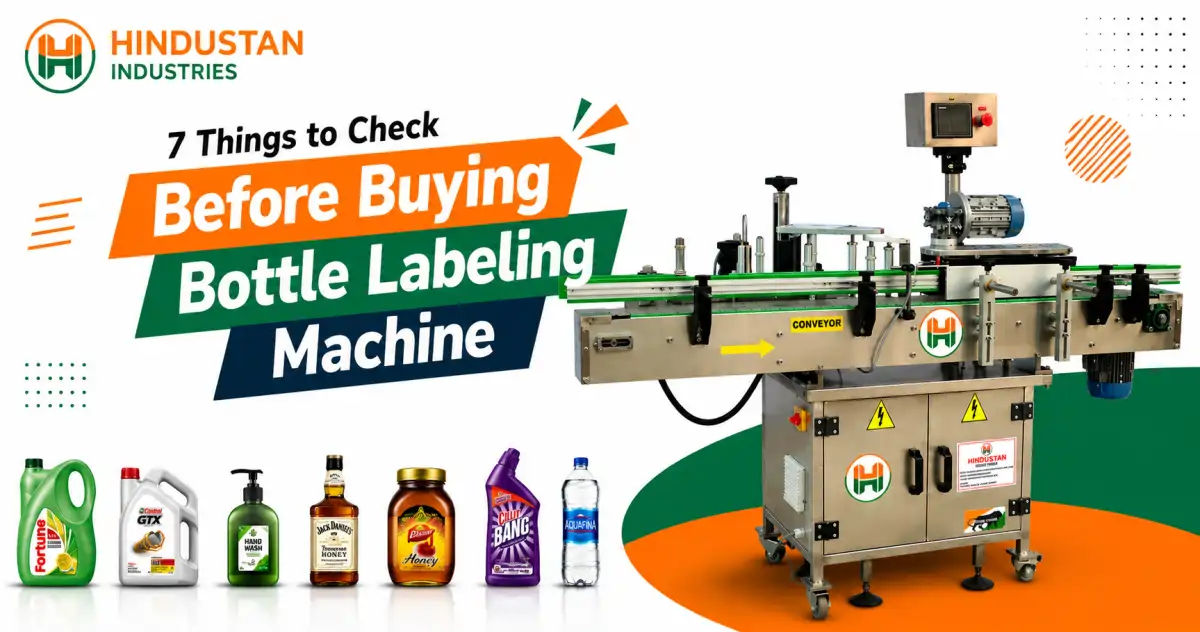
Choosing the right Bottle Labeling Machine is an important decision for any manufacturing business. A poorly selected machine can cause misaligned labels, production delays, material wastage, rejected batches, and inconsistent product presentation. These issues directly affect production efficiency, brand image, and overall packaging quality.
Whether you manufacture pharmaceutical products, food and beverages, cosmetics, chemicals, liquor, or personal care products, the right labeling equipment helps ensure smooth operation, accurate label placement, and reliable production performance.
This Bottle Labeling Machine Buying Guide explains the key factors every buyer should check before investing in a machine. The goal is simple: to help manufacturers choose a machine that supports current production requirements and future business growth.
This guide has been prepared with practical insights from Sagar Kapoor, Owner of Hindustan Industries, based on hands-on experience in designing and supplying labeling solutions for real production environments.
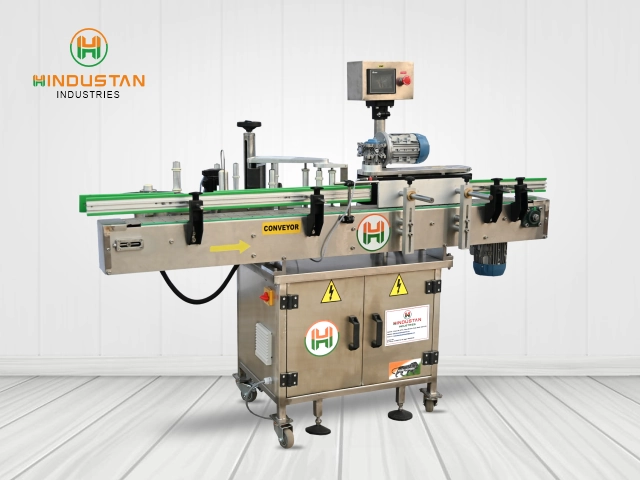
For businesses looking for a reliable solution, Hindustan Industries offers advanced Automatic Bottle Labeling Machines designed for accuracy, durability, and easy operation.
Why Choosing the Right Bottle Labeling Machine Matters
A bottle labeling machine does much more than apply labels to containers. It plays a direct role in product appearance, brand trust, packaging consistency, production speed, and operational efficiency.
Poor labeling can lead to:
- Crooked or wrinkled labels
- Higher label wastage
- Product rejection
- Manual rework
- Production downtime
- Weak shelf presentation
- Customer dissatisfaction
The right Sticker Labeling Machine helps improve productivity, reduce labor dependency, minimize errors, and ensure that every bottle leaving your facility looks professional and consistent.
For regulated sectors such as food and pharmaceuticals, accurate labeling also supports better packaging discipline. Food manufacturers should always refer to current FSSAI labelling and display regulations, while pharmaceutical businesses should check relevant CDSCO guidance documents based on their product category and market requirements
1. Assess Your Production Capacity Requirements
The first question to ask before buying a bottle labeling machine is:
How many bottles do you need to label per minute or per hour?
Your production volume, daily output target, shift pattern, and future growth plans should all be considered before selecting a machine.
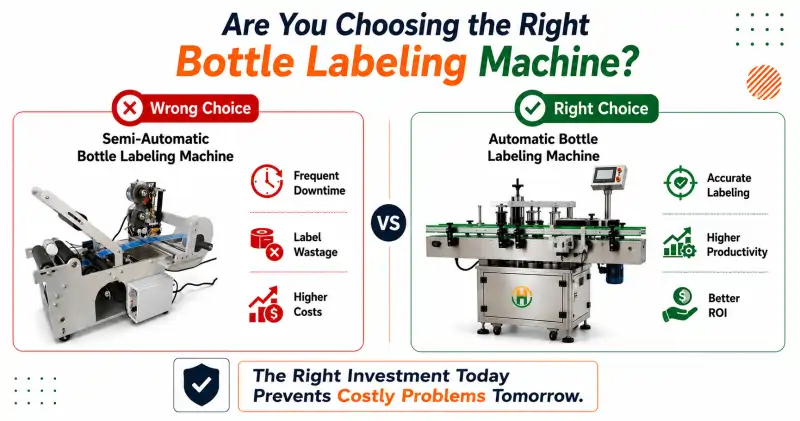
For small production units, a semi-automatic solution may be enough. But for medium and large manufacturing units, an Automatic Sticker Labeling Machine is usually a better choice because it offers higher speed, consistent label placement, and smoother production flow.
What to Check:
Before finalizing the machine, check:
- Bottles per minute capacity
- Daily and monthly production targets
- Number of working shifts
- Current production line speed
- Expected production growth
- Integration with filling, capping, or packing machines
Expert Tip
Do not buy only on the basis of machine speed mentioned in the brochure. Ask the manufacturer to test your actual bottle, label roll, and production conditions. Real-world performance can vary depending on bottle shape, label size, product handling, and operator skill.
2. Ensure Compatibility with Bottle Shapes and Sizes
Not every labeling machine works with every bottle. Bottle shape, size, material, surface finish, and stability all affect labeling performance.
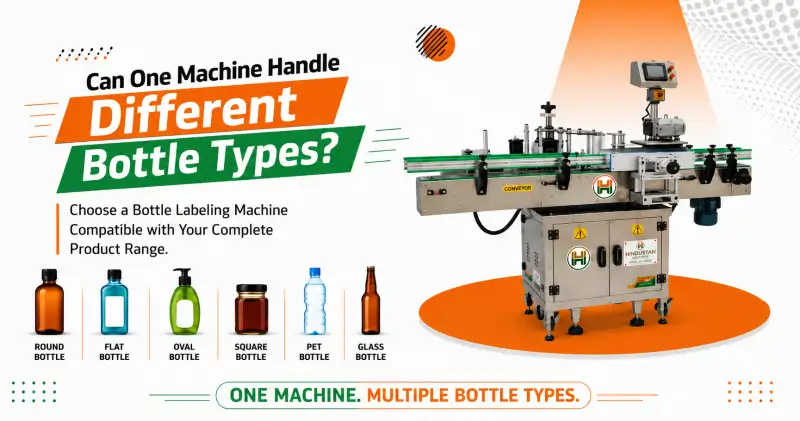
Common bottle types include:
- Round bottles
- Flat bottles
- Oval bottles
- Square containers
- PET bottles
- Glass bottles
- HDPE bottles
- Tapered bottles
- Small vials
- Large jars and containers
Some machines are designed only for round bottles, while others can handle multiple container formats with proper changeover adjustments.
For example, a Round Bottle Labeling Machine may be ideal for cylindrical containers, while a Double Side Labeling Machine is better for flat, oval, or rectangular bottles that need front and back labels.
Why Bottle Compatibility Matters
Using an incompatible machine can cause:
- Label misalignment
- Poor label wrapping
- Bottle slipping
- Frequent stoppages
- Increased rejection rate
- Extra manual correction
Before buying, always share bottle samples, label samples, bottle dimensions, and production speed requirements with the supplier. A reliable manufacturer should evaluate your container properly before recommending a model.
3. Check Labeling Accuracy and Precision
Labeling accuracy is one of the most important factors in machine selection. Even a small label placement error can make the product look unprofessional.
Modern automatic labeling machines use technologies such as:
- Servo motor systems
- Photoelectric sensors
- PLC control systems
- Touchscreen HMI controls
- Automatic synchronization systems
- Label gap detection sensors
These features help maintain consistent label placement even at higher production speeds.
Why Accuracy Matters
Precise labeling helps improve:
- Shelf appeal
- Brand presentation
- Batch consistency
- Packaging quality
- Customer confidence
- Label material usage
For industries such as pharmaceuticals, food, cosmetics, and beverages, consistency in label placement is especially important. It helps maintain a clean product appearance and supports proper display of required product information.
Cosmetic manufacturers targeting international markets can also refer to the FDA Cosmetics Labeling Guide to understand common labeling expectations.
4. Evaluate Ease of Operation and Changeover
A good bottle labeling machine should not be complicated for operators to use. If a machine is difficult to understand, it can increase training time, slow down production, and create repeated errors.
Look for user-friendly features such as:
- Touchscreen Human Machine Interface
- Recipe storage for different bottle sizes
- Tool-free adjustments
- Quick label roll replacement
- Easy conveyor height adjustment
- Simple speed control
- Clear error alerts
Manufacturers producing multiple SKUs often need to switch between different bottle sizes and label formats several times a day. In such cases, faster changeover can save significant production time.
Questions to Ask Before Buying
Ask your supplier:
- How long does bottle size changeover take?
- Can operators learn the system quickly?
- Is technical expertise required for adjustment?
- Can settings be saved for repeat products?
- Is the HMI simple and easy to understand?
The simpler the machine is to operate, the smoother your production process becomes.
5. Examine Build Quality and Material Standards
A bottle labeling machine is a long-term investment. Its durability directly affects maintenance cost, machine life, and production reliability.
High-quality machines typically include:
- SS304 stainless steel construction
- Corrosion-resistant machine parts
- Heavy-duty conveyor system
- Premium electrical components
- Strong machine frame
- Hygienic design
- Smooth product handling system
For food and pharmaceutical applications, machine construction and hygiene standards become even more important. Buyers should check whether the machine design supports clean operation and easy maintenance.
Manufacturers following structured quality systems may also refer to standards such as ISO 9001 quality management, which focuses on consistent processes, customer requirements, and continual improvement.
Why Build Quality Matters?
Poor machine construction may lead to:
- Frequent breakdowns
- Higher repair expenses
- Inconsistent performance
- Increased downtime
- Shorter machine lifespan
- Poor long-term return on investment
Always ask about the material used, component brands, machine frame quality, sensor quality, and availability of spare parts before finalizing your purchase.
6. Verify After-Sales Support and Service Availability
Even the best machine requires maintenance, training, and technical support from time to time. This is why after-sales service should be checked before purchase, not after installation.
A reliable labeling machine manufacturer should provide:
- Installation assistance
- Operator training
- Spare parts availability
- Preventive maintenance support
- Troubleshooting guidance
- Technical documentation
- Quick response for service requests
Why Service Support Is Crucial?
Unexpected machine downtime can affect production schedules, dispatch timelines, and customer commitments. If spare parts or technical support are not available on time, a small issue can turn into a major production loss.
Before buying, ask:
- Where is the service team located?
- How quickly can support be provided?
- Are spare parts available in India?
- Is operator training included?
- Is remote troubleshooting available?
A good supplier should act as a long-term partner, not just a machine seller.
Hindustan Industries provides installation and support assistance to help manufacturers set up and operate labeling machines with confidence.
7. Compare Total Cost of Ownership, Not Just Purchase Price
Many buyers focus only on the initial price of the machine. This is one of the biggest mistakes when buying a bottle label applicator.
The cheapest machine may not always be the most cost-effective choice. A low-cost machine can become expensive if it causes frequent downtime, label wastage, poor accuracy, or high maintenance expenses.
Costs to Consider
When comparing machines, check:
- Purchase price
- Installation cost
- Maintenance cost
- Spare parts availability
- Energy consumption
- Label wastage
- Operator dependency
- Production efficiency
- Machine lifespan
- Service response time
A durable and efficient machine may require a slightly higher investment in the beginning, but it can deliver better return on investment over time through improved productivity and lower operating costs.
Think Long-Term
A good bottle labeling machine should support your production for years. Instead of choosing only the lowest price, compare the overall value, machine reliability, service support, and production benefits.
Additional Features Worth Considering
Hindustan Industries’ automatic labeling machines are designed to improve accuracy, efficiency, and ease of operation for different manufacturing requirements.
Important features include:
- PLC and Touchscreen HMI controls
- Accurate label placement
- Compatibility with round, flat, and oval bottles
- SS304 stainless steel construction
- Quick changeover system
- Easy integration with existing production lines
- Durable conveyor system
- Reliable after-sales support
- Installation and operator training assistance
These features help manufacturers reduce downtime, maintain labeling consistency, and improve overall packaging line performance.
Explore Hindustan Industries’ Labeling Machine Solutions to find a suitable model for your production line.
Common Mistakes to Avoid When Buying a Bottle Labeling Machine
Choosing the wrong bottle label applicator can lead to unnecessary cost, production delays, and poor packaging results.
Avoid these common mistakes:
- Buying only on the basis of price
- Ignoring future production growth
- Not testing bottle and label samples
- Choosing the wrong machine for bottle shape
- Overlooking after-sales service
- Ignoring spare parts availability
- Selecting a machine that is difficult to operate
- Not checking labeling accuracy
- Failing to compare total ownership cost
A clear evaluation process helps you choose a machine that delivers reliable performance and long-term value.
Bottle Labeling Machine Buying Checklist
Buying Factor | What to Check | Production Capacity | Bottles per minute, daily targets, future growth |
|---|---|
Bottle Compatibility | Round, flat, oval, square, PET, glass, tapered bottles |
Label Accuracy | Sensor quality, servo control, placement consistency |
Ease of Operation | HMI, recipe storage, tool-free adjustment |
Changeover Time | Time required to switch bottle or label size |
Build Quality | SS304 body, conveyor strength, component quality |
Service Support | Installation, training, spare parts, maintenance |
Total Cost | Purchase price, downtime, maintenance, machine life |
Why Choose Hindustan Industries for Bottle Labeling Machines?
Hindustan Industries designs and manufactures automatic labeling machines for real production requirements across multiple industries, including pharmaceuticals, food and beverages, cosmetics, chemicals, liquor, and personal ca re.
With practical industry experience and a focus on machine reliability, Hindustan Industries helps businesses choose labeling solutions based on bottle type, production speed, label size, and operational needs.
Hindustan Industries Supports
- Pharmaceutical manufacturers
- Food and beverage companies
- Cosmetic product manufacturers
- Chemical product manufacturers
- Liquor and beverage brands
- Packaging units
- Contract manufacturers
- Private label manufacturers
If you are planning to upgrade your packaging line or invest in your first labeling system, Hindustan Industries can help you select the right machine based on your production goals.
Conclusion
Investing in the right Bottle Sticker Labeling Machine is not just about buying packaging equipment. It is about improving productivity, protecting your brand image, reducing wastage, and supporting long-term business growth.
By carefully evaluating production capacity, bottle compatibility, labeling precision, ease of operation, build quality, after-sales support, and total ownership cost, you can make a confident and value-focused buying decision.
At Hindustan Industries, we understand that every manufacturing operation has unique requirements. With experience in designing and manufacturing advanced automatic sticker labeling machines, we help businesses choose solutions tailored to their production needs.
If you are planning to upgrade your packaging line or invest in your first labeling system, use this guide as your checklist.