
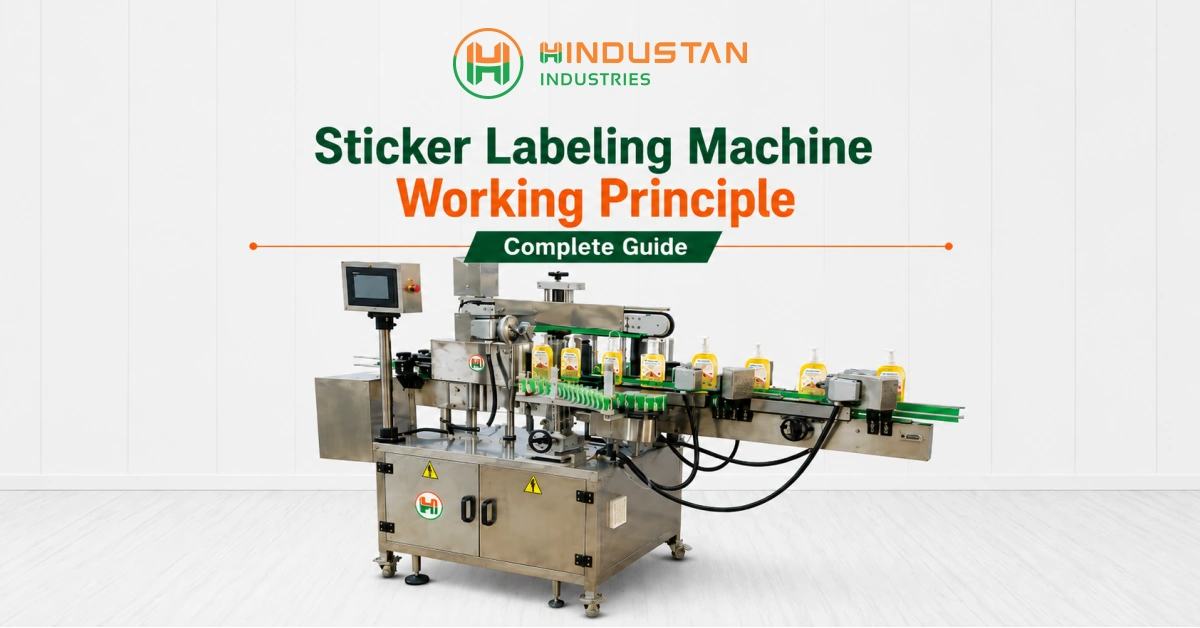
Sticker Labeling Machines play an essential role in modern packaging operations, helping manufacturers apply labels accurately, consistently, and efficiently. From pharmaceutical bottles and food containers to cosmetic products and chemical packaging, these machines improve production speed while maintaining professional product presentation and labeling accuracy.
Understanding the Sticker Labeling Machine working principle helps manufacturers improve labeling accuracy, reduce wastage, and optimize packaging operations. Whether you operate in the pharmaceutical, food and beverage, cosmetic, chemical, liquor, or nutraceutical industry, knowing the machine’s working principle can support better production planning and performance.
With over 10 years of experience in manufacturing and supplying Sticker Labeling Machines, Sagar Kapoor, Owner of Hindustan Industries, has helped businesses optimise their labeling operations. This guide explains the working process, key components, labeling methods, and performance factors to help manufacturers make informed decisions when selecting and operating labeling equipment.
What Is a Sticker Labeling Machine?
A Sticker Labeling Machine is an automated packaging machine designed to apply self-adhesive labels onto products or containers. These labels may include branding elements, product information, regulatory details, barcodes, batch numbers, or expiry dates.
Sticker Labeling Machines are widely used in industries such as:
- Pharmaceutical manufacturing
- Food and beverage processing
- Cosmetics and Ayurvedic
- Chemicals
- Liquor and Automotive
- Nutraceuticals
- Household products
Their primary objective is to deliver precise label placement while maintaining high production speeds and consistent quality.
Sticker Labeling Machine Working Principle: How It Works
The working process of a Sticker Labeling Machine involves several coordinated steps. Although machine designs vary depending on applications, most follow the same fundamental principle.
1. Product Feeding
The process begins when containers enter the machine through a conveyor system. Products are positioned at a controlled speed and spacing to ensure each container reaches the labeling station correctly.
Modern machines often use sensors to detect the presence of incoming products, preventing missed labels and reducing errors.
2. Product Detection
Photoelectric sensors identify the exact position of the product before labeling begins. Once detected, the machine synchronises label dispensing with conveyor movement.
Accurate product detection is essential because even slight timing variations can result in crooked or misplaced labels.
3. Label Dispensing
Labels are stored on rolls attached to the machine. As the label web moves forward, it passes over a dispensing plate, commonly called a peel plate.
Because the backing paper changes direction sharply around the peel plate, the adhesive label separates from the liner and becomes ready for application.
4. Label Application
The released label is applied to the product using one of several methods:
- Pressure application rollers
- Wrap-around belts
- Wipe-on systems
- Tamp applicators
- Air-blow systems
The application method depends on the container shape, label type, and production requirements.
5. Label Pressing and Finishing
After application, pressure rollers ensure the label adheres smoothly to the product surface. This step removes trapped air bubbles and enhances the overall appearance.
The finished product then exits the machine for further packaging processes.
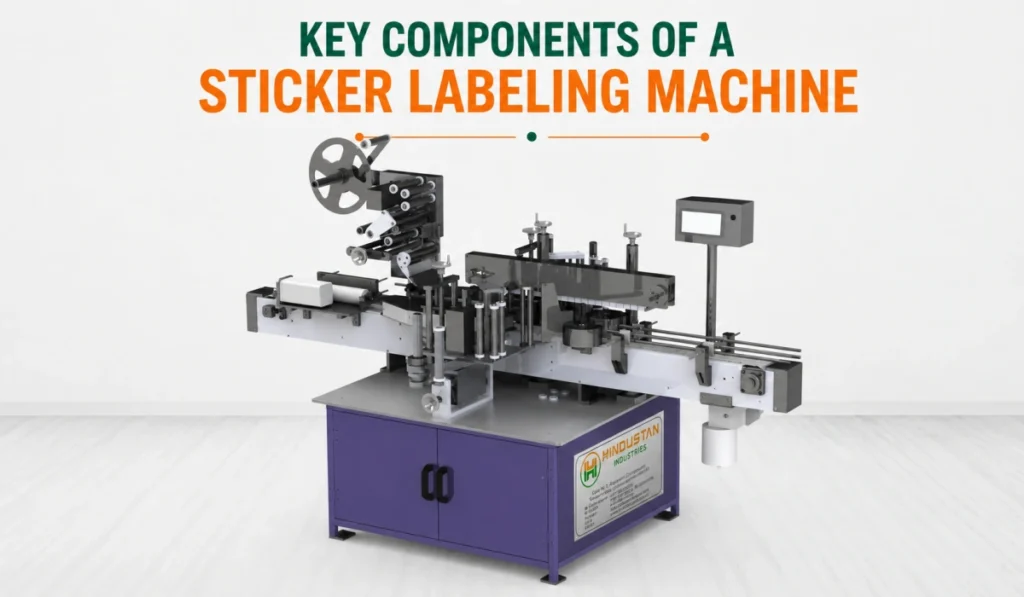
Key Components of a Sticker Labeling Machine
Understanding the major components helps manufacturers appreciate how the entire system functions.
Conveyor System
Transports products through the labeling process while maintaining consistent spacing and speed.
Label Roll Holder
Holds the roll of self-adhesive labels securely and feeds them into the dispensing mechanism.
Peel Plate
Separates labels from the backing material for precise application.
Sensors
Detect products and control label release timing to maintain accuracy.
Applicator Unit
Transfers the label onto the container using the chosen application method.
Pressure Rollers
Ensure proper adhesion and eliminate wrinkles or bubbles.
Control Panel
Allows operators to adjust settings such as speed, label position, production counts, and machine diagnostics.
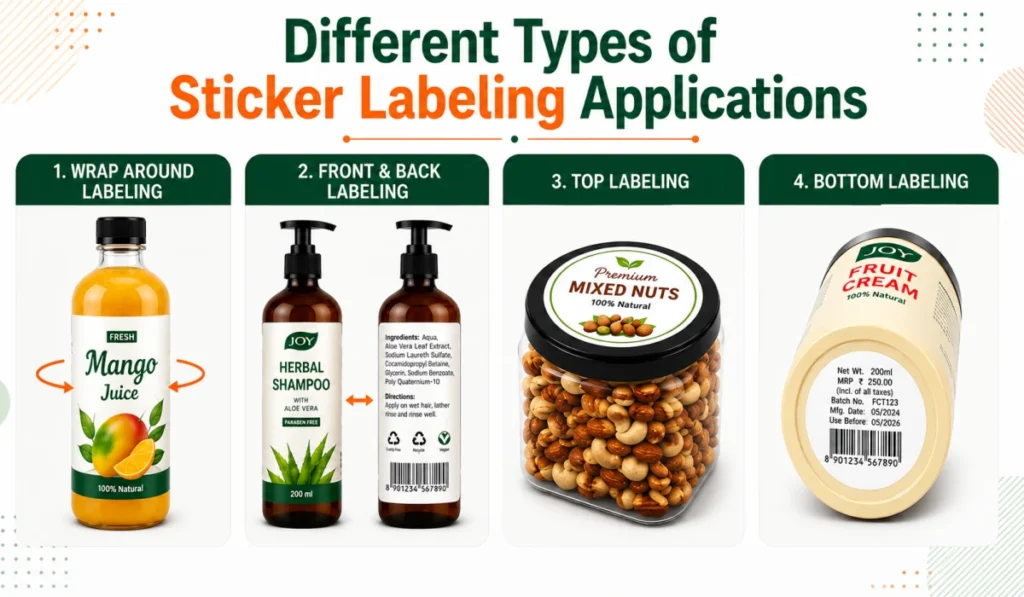
Different Sticker Labeling Methods
Sticker Labeling Machines can be configured for different packaging applications.
Wrap-Around Labeling
Used primarily for round bottles and containers. The label wraps around the circumference of the product.
Front and Back Labeling
Applies labels simultaneously to both sides of flat or oval containers.
Top Labeling
Places labels on the upper surface of cartons, boxes, trays, and pouches.
Bottom Labeling
Used when information needs to appear underneath the product packaging
Corner Wrap Labeling
Often used as tamper-evident labeling by extending the label across product edges.
Factors That Affect Labeling Performance
Several factors influence the efficiency and quality of the labeling process.
Product Shape and Size
Round, flat, oval, and square containers require different machine configurations.
Label Material
Paper, transparent films, metallic labels, and specialty materials behave differently during dispensing.
Conveyor Speed
Incorrect synchronization between conveyor speed and label dispensing can impact accuracy.
Environmental Conditions
Dust, humidity, and temperature variations may affect adhesive performance.
Operator Training
Proper setup and routine adjustments significantly reduce downtime and labeling errors.
Benefits of Using a Sticker Labeling Machine
Investing in the right labeling solution offers numerous advantages.
Improved Productivity
Automated labeling significantly increases production output compared to manual labeling.
Consistent Label Placement
Every product receives uniform label positioning, enhancing shelf appeal and brand presentation.
Reduced Labour Costs
Automation minimises dependency on manual labor and lowers operational expenses.
Minimal Label Wastage
Precision dispensing reduces material loss and improves cost efficiency.
Regulatory Compliance
Accurate labeling ensures important information such as ingredients, batch numbers, and expiry dates is consistently displayed.
How to Choose the Right Sticker Labeling Machine
Before purchasing a machine, manufacturers should evaluate:
- Production capacity requirements
- Container shapes and sizes
- Label specifications
- Required automation level
- Future scalability
- Maintenance support availability
- Budget and return on investment
Choosing the right machine ensures long-term operational efficiency and supports future business growth.
Conclusion
Sticker Labeling Machines have become an essential part of modern packaging lines, helping manufacturers apply labels quickly, accurately, and consistently across a wide range of products. From detecting containers and dispensing labels to ensuring smooth application, every stage of the process is designed to reduce errors and maintain packaging quality.
Understanding how a Sticker Labeling Machine works not only helps businesses optimise their production processes but also enables them to identify the right solution for their operational needs. Whether you manufacture pharmaceutical products, food items, cosmetics, chemicals, or beverages, investing in the right labeling technology can support efficient production, minimise wastage, and deliver a professional finish that reflects the quality of your brand.